T Coronae Borealis
"The Blaze Star" — due any time since 1946, watched every clear night since.
AAVSO Campaign #875 · Active WatchHow a recurrent nova works
A cool giant and a dead star, locked close enough that one feeds the other until the fuel ignites. Colors below are the real thing: each star's actual blackbody color, not a palette pick.
Eruption timeline
Two confirmed eruptions on record. The gap between them is why everyone's watching right now.
Light curve
Brighter is up (magnitude is inverted on purpose). Colors match the real AAVSO photometric-band convention: B filter is blue, V filter is green, naked-eye visual estimates are plotted as neutral gray dots.
Real AAVSO data, one request/day (politely under their rate limit), averaged per band from whatever that day's single request returned — see scripts/fetch_tcrb.py. The axis fits to however many days we've actually backfilled so far (capped at 365) and widens as more get pulled. Browser fetches are blocked by AAVSO's Cloudflare wall by design, so refreshes run from this machine, not the page itself — paste a manual export below if you want to add something sooner.
Last 24 hours, raw
Every observation AAVSO had for T CrB in the last 24 hours, not averaged — full scatter, so you can tell a real trend from one noisy reading. Pulled automatically once a day at the 06:13 refresh.
| Date (UTC) | Mag | Band | Observer |
|---|
Loading...
When can I see it?
Rise, transit, and set for Corona Borealis (and T CrB specifically) today, as seen from our US East Coast reference location -- computed fresh every night at 12:01 AM, shown below converted to your own browser's local time.
Finding it in the sky
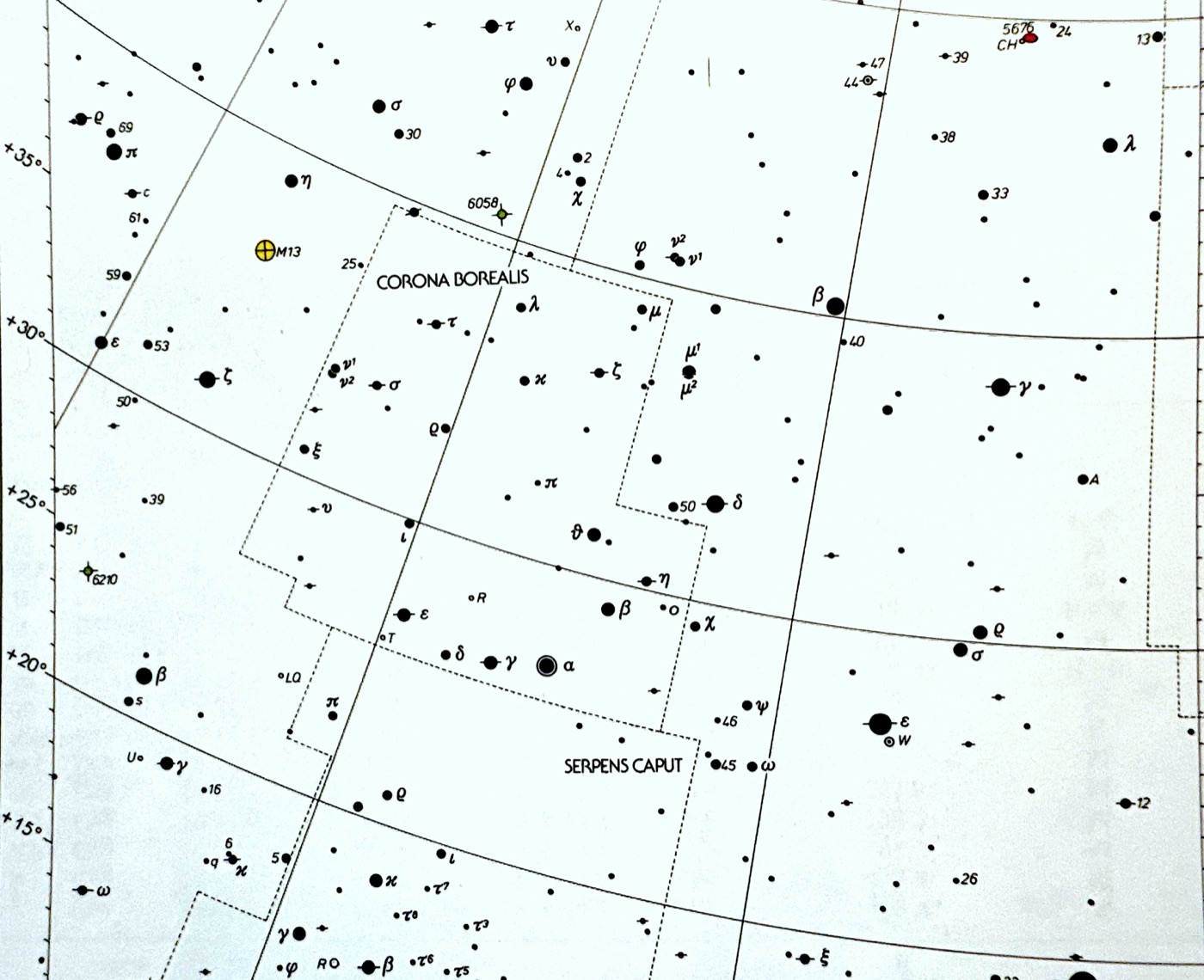
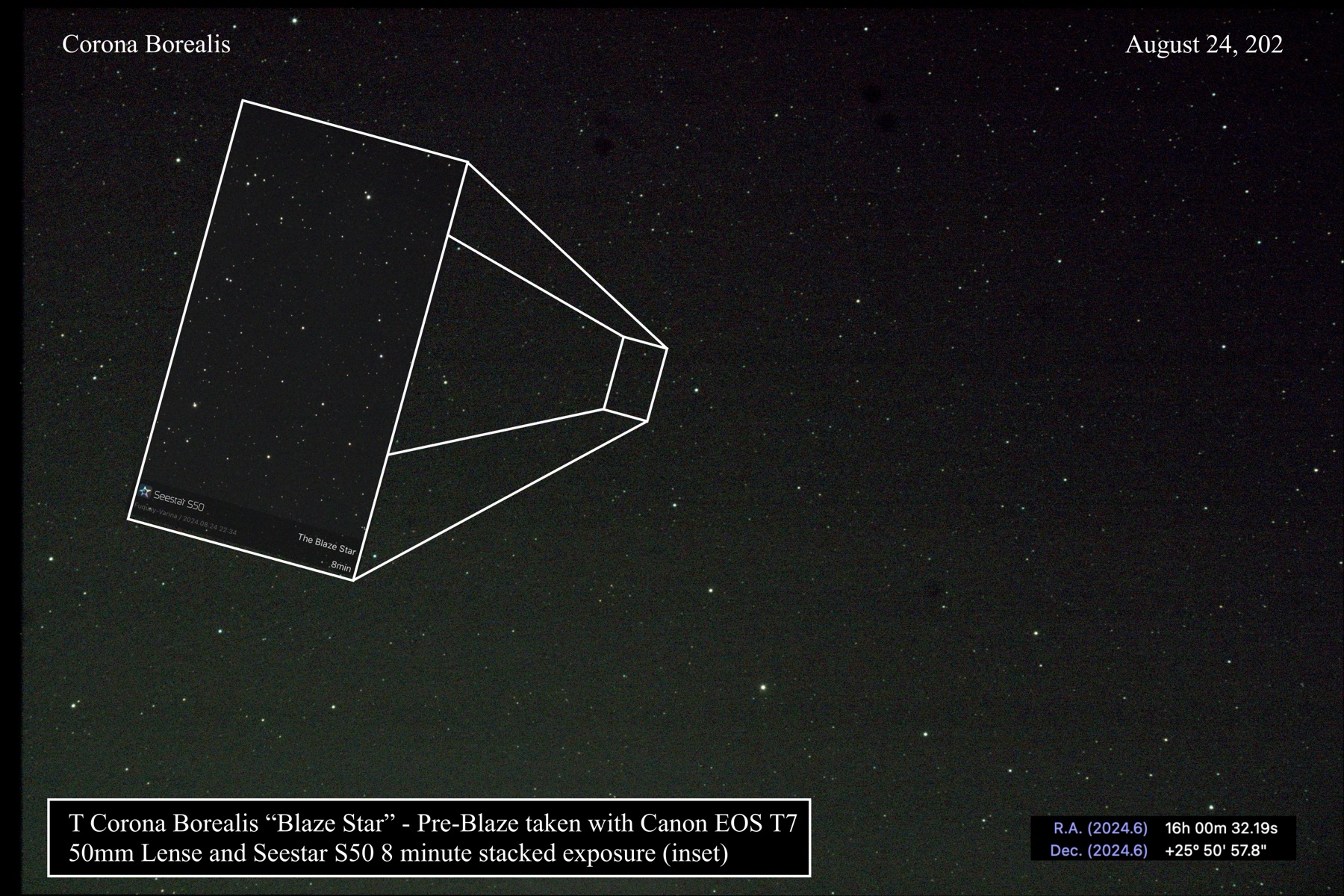
Corona Borealis, the "Northern Crown" — a small, distinctive semicircle of stars between Boötes and Hercules. T CrB sits just off the arc, too faint to see normally. Aaron's own capture, Seestar S50, Fuquay-Varina, 2024-08-24.
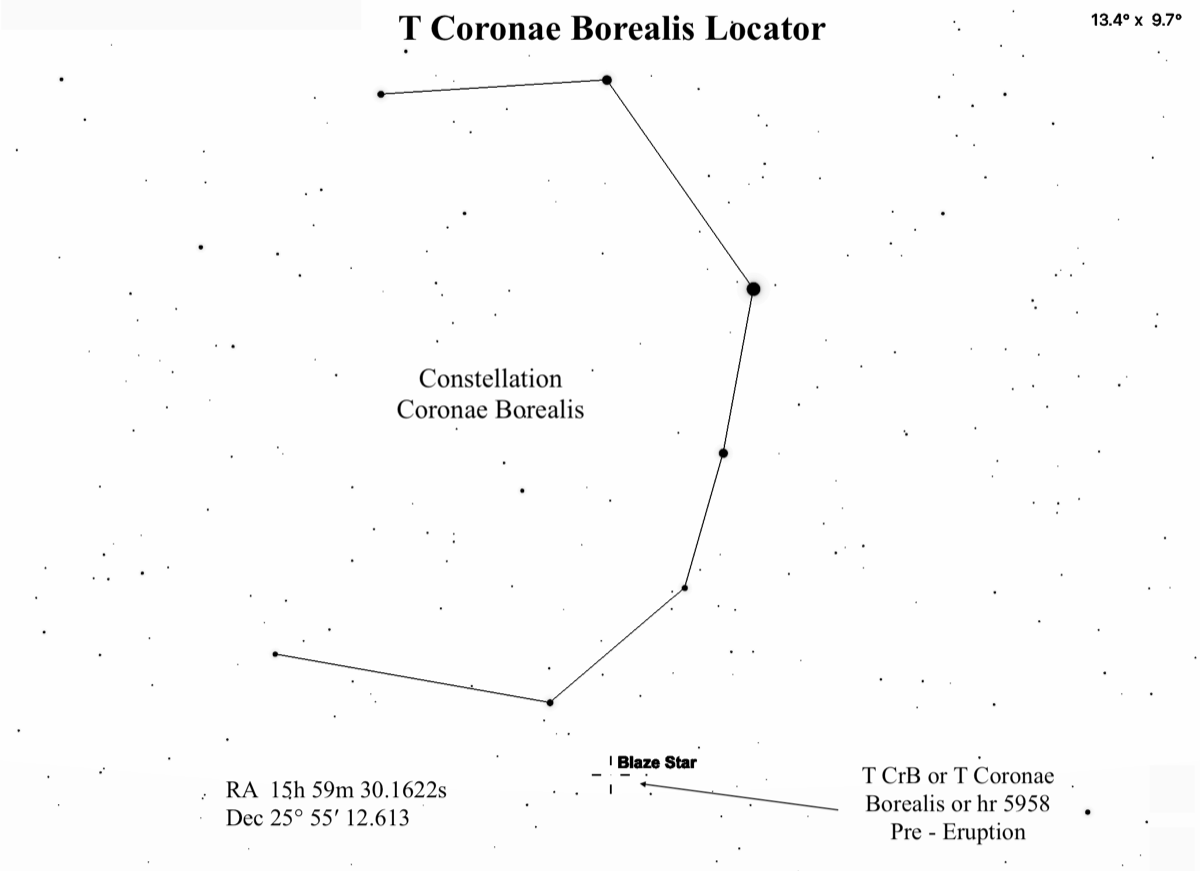
Professional atlas reference (Will Tirion)